
Written by
Burlington Painters Team
Burlington’s trusted exterior & stucco painting experts. 20+ years of protecting local homes from Canada’s harsh climate. We share pro tips, product guides, and cost-saving advice.
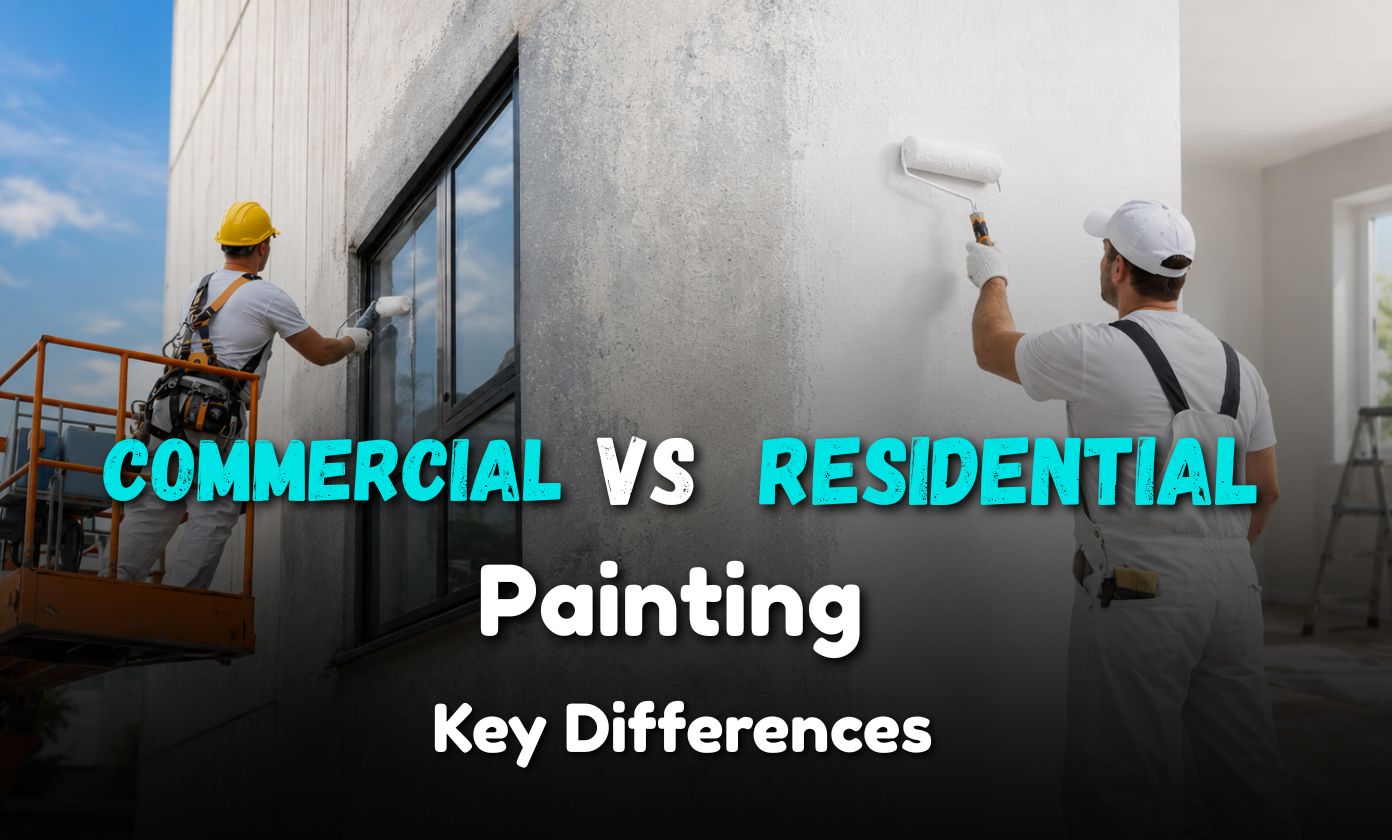
Commercial and residential painting differ in scale, scheduling, products, insurance requirements, and project management. Residential painting covers homes such as interior walls, ceilings, trim, and exteriors using low-VOC consumer-grade or premium acrylic products. Commercial painting covers offices, retail spaces, and multi-unit buildings, requiring quick-dry industrial coatings, off-hours scheduling, larger crews, and a minimum $5M liability COI. In Burlington and across Halton Region, the same company can handle both scopes but the crew, products, and project management approach should be distinctly different for each.
Key Takeaways
Residential painting prioritizes finish quality, low odour, and liveable conditions, commercial prioritizes speed, durability, and minimal business downtime
Commercial painters in Burlington must carry $5M+ liability insurance and a COI naming the property, $2M is the residential minimum
Off-hours scheduling (evenings/weekends) is standard for Burlington commercial projects
The same painting company can serve both markets but should have separate trained crews for each
Burlington commercial painting costs $1.50–$4.00/sq ft + HST; residential interior runs $2.00–$4.00/sq ft + HST
Commercial vs. Residential Painting in Burlington, Ontario: What's Actually Different?
Most property owners assume painting is painting. Pick a colour, hire a crew, get it done. That assumption is exactly what leads to costly project failures.
Commercial and residential painting are genuinely different disciplines different products, different timelines, different insurance requirements, and entirely different approaches to managing a job. As Burlington painters serving both markets since 2000, Burloak Painting & Renovation has seen what happens when the wrong type of crew is hired for the wrong type of property. This guide gives Burlington, Oakville, Milton, Mississauga, and Hamilton property owners a clear breakdown so you hire right the first time.
What Residential Painting Covers in Burlington
Residential painting services in Burlington cover every painted surface inside and outside a privately owned home detached, semi-detached, townhomes, and condos across Halton Region.
Interior residential scope includes:
Walls, ceilings, trim, and baseboards
Doors and built-ins
Stairwells and feature walls
Cabinet refinishing (specialty scope)
Exterior residential scope includes:
Siding, stucco, brick, and fascia
Soffits, eavestroughs, and exterior doors
Full exterior painting services from prep through topcoat
As Burlington painters with 25 years in the Halton market, Burloak Painters specifies Sherwin-Williams Emerald or Benjamin Moore Regal Select for interior residential work low-VOC, washable, and durable for family environments. For exterior residential projects, Duration Exterior or Aura Exterior handle Burlington's -20°C to +35°C climate swing.
What Commercial Painting Covers in Burlington
Burlington commercial painters handle offices, retail stores, restaurants, industrial facilities, multi-unit residential buildings, and institutional properties across Burlington, Oakville, Mississauga, Hamilton, and Milton.
Commercial scope includes:
Large-area drywall and concrete block walls
Metal doors and frames
Epoxy-coated floors
Exterior building facades and parking structures
Warehouse and industrial interiors
Burlington commercial painting demands a completely different operational approach than residential work larger crews, spray application on open surfaces, quick-dry industrial coatings, and scheduling built around your business operations.
Expert Tip: Burlington commercial painters should carry a minimum $5M general liability COI naming your building as additional insured. Property managers in Halton Region routinely require this before work begins. If a contractor cannot produce it before their crew arrives, find another contractor. Learn more about what to verify before hiring painters.
5 Key Differences: Commercial vs. Residential Painting
How Commercial Projects Are Managed Differently
Burloak Painters assigns a dedicated project manager to every Burlington commercial painting scope. One point of contact coordinates crew scheduling, material ordering, building access, and daily progress property managers and business owners stay informed without chasing updates.
Minimizing Downtime for Burlington Businesses
Commercial painting in Burlington has to work around your operations. Retail spaces are often painted floor by floor or section by section during off-hours. Office buildings are typically phased by floor. Restaurants and hospitality clients in Burlington and Oakville generally require weekend-only or overnight windows.
Every Burloak commercial scope opens with a downtime assessment your business continuity comes first. This is the core difference between hiring Burlington commercial painters who specialize in your property type versus a residential crew taking on a commercial job.
Cost Comparison: Burlington Commercial vs. Residential Painting
Understanding the cost difference between Burlington painting services for commercial and residential projects helps you budget accurately from the start.
Burlington Residential Painting (2026):
Interior per sq ft: $2.00–$4.00 + HST
Full 3-bedroom home interior: $3,500–$7,000 + HST
Exterior per sq ft: $3.00–$6.00 + HST
Burlington Commercial Painting (2026):
Interior per sq ft: $1.50–$4.00 + HST (varies by ceiling height and complexity)
Specialty coatings (epoxy floor, anti-microbial, fire-retardant): priced separately by system
After-hours labour premium: typically 15–25% above standard rate
Burloak Painting provides written, itemized quotes for every scope like residential or commercial with labour, materials, product names, and HST listed separately. No ballpark estimates.
How to Hire the Right Painter for Your Burlington Property
For Commercial Properties in Burlington and Halton Region
Ask every shortlisted contractor:
Can you provide a $5M COI naming our property as additional insured?
Do all crew members carry active WSIB coverage?
Can you work outside business hours?
What Burlington or Halton Region commercial projects have you completed in the past 12 months?
Do you assign a dedicated project manager?
For Residential Properties in Burlington
Ask every shortlisted painter in Burlington:
Is the quote written and itemized, labour, product names, coats, prep, and HST separately?
Do you carry $2M+ general liability and WSIB clearance?
What specific Sherwin-Williams or Benjamin Moore line are you specifying?
Is your warranty in writing?
For a full residential hiring checklist, see our guide to choosing exterior painters in Burlington →
Can One Burlington Painting Company Handle Both?
Yes, and there are real advantages when both your home and commercial space are in Halton Region. Burloak Painting & Renovation runs dedicated residential and commercial crews across Burlington, Oakville, Mississauga, Milton, and Hamilton, with separate product specs, project management approaches, and insurance coverage for each scope. One company, two certified teams.
We also offer painting and renovation services for properties that need both painting and structural work handled under a single contract.
Bottomline
Whether you need interior painting in Burlington for your home or a full commercial repaint for your Burlington business, the key is matching the right crew, products, and project management approach to your property type. The gap between a residential crew on a commercial job or vice versa shows up quickly in the finish quality, timeline, and final cost.
Burloak Painting & Renovation has served Burlington and Halton Region since 2000 with dedicated teams for both markets. Every project is backed by a written workmanship warranty, WSIB-covered crews, and product specifications matched to your scope.
