
Written by
Burlington Painters Team
Burlington’s trusted exterior & stucco painting experts. 20+ years of protecting local homes from Canada’s harsh climate. We share pro tips, product guides, and cost-saving advice.
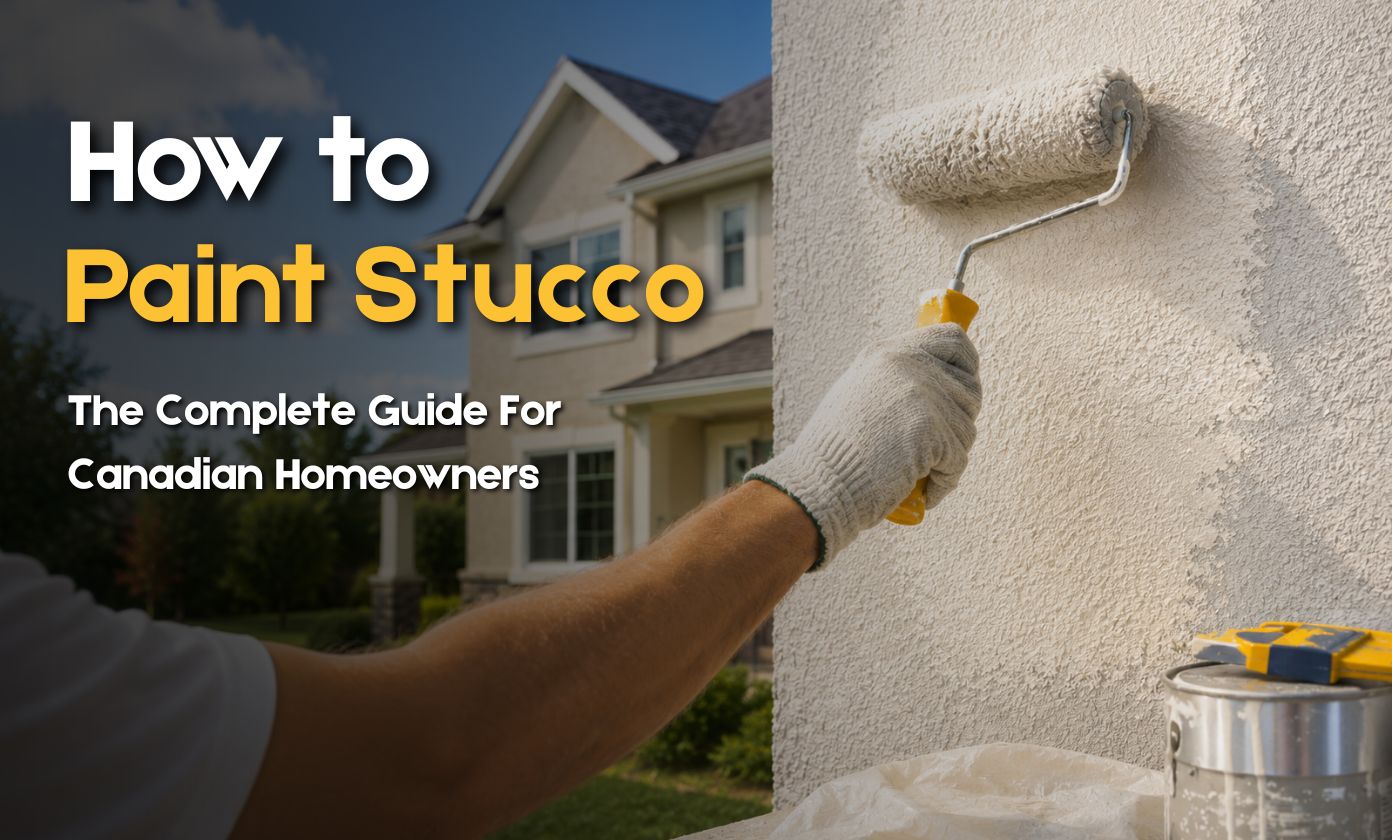
Painting stucco in Ontario requires four non-negotiable steps: repair all cracks, pressure wash and fully dry the surface, apply a masonry-specific primer, then coat with elastomeric or premium acrylic exterior paint in two coats minimum. In Burlington and across Halton Region, elastomeric paint is the professional standard its flexible formula handles freeze-thaw cycles without cracking. New stucco must cure 28-60 days before painting. Skipping crack repair or using standard exterior paint instead of masonry-rated product are the two most common reasons stucco paint jobs fail within two Ontario winters.
Key Takeaways
Repair every crack before painting such as hairline cracks reopen through topcoat within one freeze-thaw cycle
Always use a masonry-specific primer, not standard exterior primer as stucco's porosity requires deep penetration
Elastomeric paint is the professional standard for stucco in Burlington's climate (-20°C to +35°C range)
Two coats minimum such as stucco absorbs 30–50% more paint than smooth siding
EIFS (synthetic stucco) and traditional stucco require different products to confirm your type before buying
Can You Paint Stucco? What Burlington Homeowners Need to Know First
Yes, and painting is the standard way to protect and refresh stucco exteriors on Ontario homes. But stucco is porous and breathable by nature. Once you coat it, you seal that surface. Use a non-breathable paint and you trap moisture inside the wall assembly, causing spalling and structural damage behind a fresh coat.
Burlington's housing stock from the 1970s–1990s is heavily stucco and EIFS. Both are paintable, but they are not the same:
Traditional stucco such as cement-based, rigid, prone to hairline cracks with age
EIFS (Exterior Insulation Finishing System) like synthetic, softer, common on Halton Region homes built 1985–2000, requires a vapour-permeable elastomeric coating specifically
Confirm which type you have before selecting any product. If unsure, a probe test or contractor assessment will confirm it.
Step 1: Inspect and Repair All Cracks
Never paint over cracked stucco. Cracks allow water infiltration and telegraph through any new paint coat within one Burlington winter.
Crack Types and How to Address Them
Allow all repairs to cure 28 days minimum before priming. In Burlington, schedule repairs in May–July so the cure window falls before the exterior painting season ends in October.
Step 2: Clean the Surface Thoroughly
Pressure wash the entire stucco surface to remove algae, chalking, loose paint, and dirt. Use controlled low pressure, over 1,500 PSI on aged stucco can damage texture or dislodge repaired areas.
After washing, allow 48–72 hours drying time in Burlington's humidity before primer goes on. Do not rush this step as primer applied to damp stucco fails within the first season.
Step 3: Apply Masonry-Specific Primer
Standard exterior primer does not penetrate stucco deeply enough. You need a masonry-rated primer that bonds at the substrate level:
Sherwin-Williams Loxon Concrete & Masonry Primer like penetrates porous stucco, creates stable bonding base
Benjamin Moore Fresh Start High-Hiding All-Purpose Primer is excellent for Burlington's variable spring humidity
Apply with a 3/4" nap roller. Cut edges with a masonry brush. One coat of primer is standard; heavily porous or previously unpainted stucco may need two.
Step 4: Choose the Right Paint for Ontario's Climate
Elastomeric Paint: The Burlington Standard
Elastomeric paint is thick, flexible, and vapour-permeable. It bridges hairline cracks up to 1/16", handles Burlington's -20°C to +35°C temperature swing without cracking, and allows moisture vapour to escape from the wall assembly.
Standard acrylic exterior paint is not wrong but it offers zero crack-bridging and requires a flawless substrate. In Burlington's freeze-thaw environment, elastomeric is the lower-risk, longer-lasting choice on most stucco homes.
Step 5: Apply Paint Using Spray + Back-Roll Method
Airless sprayer is the professional application method for stucco. Spraying penetrates the textured surface fully, rollers alone leave bridging gaps on highly textured stucco.
The correct process:
Spray a full wet coat across the surface
Immediately back-roll with a 3/4"–1" nap roller to press paint into all recesses
Allow to dry fully per product specs (typically 4–6 hours)
Apply second coat in the same sequence
Two coats are always required. Stucco absorbs 30–50% more paint than smooth siding one coat will look patchy and uneven regardless of product quality.
The 3 Most Common Stucco Painting Mistakes in Ontario
Painting over cracks without repair; they return through topcoat within one winter; the new paint does not bond across the crack gap
Using non-breathable paint traps moisture behind stucco and causes spalling from the inside out; particularly destructive on EIFS surfaces in Burlington's wet springs
Painting before the surface is fully dry: adhesion fails within the first season; a common error in Burlington's humid May window when homeowners rush to get the project started
Should You DIY or Hire a Burlington Stucco Painter?
Small touch-ups on single-storey stucco in good condition are manageable DIY if you match the product correctly and prep thoroughly. A full two-storey exterior stucco repaint involves:
Pressure washing at correct PSI for stucco
Masonry primer application at proper nap thickness
Airless sprayer operation and back-rolling technique
Ladder or scaffolding access management
These are professional scopes. Burloak Painters provides free on-site estimates for stucco painting across Burlington, Oakville, Hamilton, Milton, and Mississauga we assess your stucco type, condition, and confirm the right product before any number goes on paper.
Bottomline
Painting stucco in Burlington and across Ontario is not a standard exterior painting job, it requires the right crack assessment, the right primer, and a paint product matched to stucco's unique demands and Ontario's climate. Every step skipped shortens the lifespan of the job significantly.
Burloak Painters has completed stucco repaints across Burlington, Oakville, Hamilton, Milton, and Mississauga since 2000. Every project is assessed on-site, specified by product name, and backed by a written workmanship warranty.
